By Samuel Okposin
EKET, Nigeria — As of April 2026, the global livestock feed industry is navigating a transformative era defined by extreme market volatility, rapid technological integration, and a fundamental shift toward "precision nutrition." Valued at over $506 billion, the sector is no longer just a supply chain for agriculture; it has become a high-tech frontier for biotechnology and climate science.
The Rise of Precision Nutrition and AI
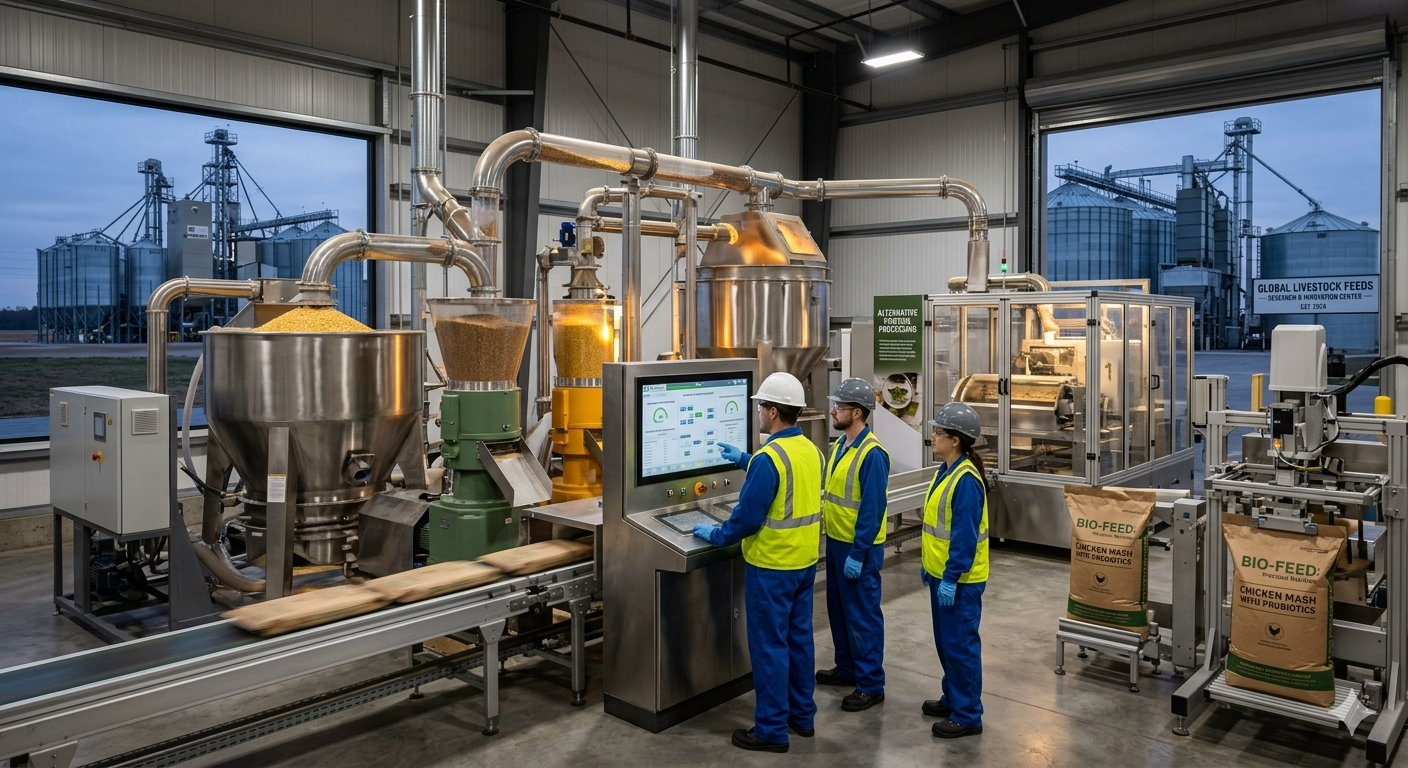
The most significant trend this year is the move away from traditional "least-cost" feed formulation toward Precision Nutrition. Utilizing AI-driven algorithms, producers are now tailoring feed compositions in real-time based on the specific genetic profile, age, and health status of the livestock.
This shift is largely powered by Microbiome Engineering. Modern feed is increasingly supplemented with bioactive compounds that cultivate beneficial gut bacteria, significantly boosting animal immunity. This innovation has become the primary tool for the industry to meet global mandates for reducing antibiotic use, effectively bridging the gap between animal productivity and public health.
Economic Headwinds: The Input Squeeze
Despite technological gains, the industry is grappling with intense economic pressure. Reports from the first quarter of 2026 indicate a tightening of global grain supplies. In the United States, a strategic shift in acreage—where farmers have pivoted toward soybeans and specialty oilseeds—has left corn supplies under pressure, driving up the cost of energy-dense rations.
Raw materials now account for roughly 70% to 80% of total production costs. To combat this, major players are investing heavily in alternative protein sources. Insect meal and microbial proteins (derived from CO2-eating bacteria) have moved from niche experiments to commercial-scale production, providing a critical buffer against the price swings of traditional soy and fishmeal.
Regional Dynamics: The Asia-Pacific Dominance
The Asia-Pacific region continues to be the undisputed engine of growth, commanding nearly 40% of the global market. Rapid urbanization in India and Southeast Asia has triggered a massive transition from backyard farming to integrated, industrial-scale operations. This modernization has created an insatiable demand for high-quality compound feeds that can deliver faster growth cycles, particularly in the poultry and swine sectors.
In contrast, the European market is focusing its innovation on environmental compliance. With strict 2030 climate targets looming, the adoption of methane-reducing feed additives for dairy and beef cattle has become mandatory in several jurisdictions. These additives, often derived from red seaweed or synthetic compounds, are now proven to reduce enteric methane emissions by up to 30% without sacrificing milk yield.
Sustainability and the "One Health" Standard
Sustainability has evolved from a corporate slogan into a regulatory requirement. The "One Health" approach—recognizing that the health of people, animals, and the environment are interconnected—is now the standard for feed safety.
This has led to the rise of Circular Feed Systems, where agricultural byproducts that were once considered waste (such as fruit peels, bakery meal, and distillery grains) are upcycled into high-value nutrition. This not only lowers the carbon footprint of meat production but also helps stabilize the supply chain against crop failures caused by increasingly erratic global weather patterns.
Future Outlook
As the industry moves through 2026, the focus is squarely on traceability. Using blockchain and digital "passports" for feed ingredients, producers are responding to consumer demands for transparency regarding the origin and environmental impact of what their livestock eats. While the "input squeeze" remains a threat to margins, the industry's pivot toward bio-tech and upcycled materials suggests a more resilient and sustainable path forward for global food security.